
Series Introduction:
The 12-Step Walk Through Grief:
Finding Hope After Loss
If you are reading this, chances are your world has just ended.
You aren’t looking at these words because you want to learn a new skill or improve your life; you are looking at them because a catastrophic loss has leveled your reality, and you are trying to figure out how to breathe in the wreckage.
I was there in the hospital room, reading the Bible out loud to my husband. He wanted me to read it to him even when they put him under to intubate him. He said he could hear me even when he was under, that it gave him comfort. I don’t remember the scripture I was on, but I do remember when his breath didn’t pull… there was that pause… and then the machine forced air into his lungs. He was gone…
Most of the conventional advice surrounding grief is sanitized. It tells you about the “stages of grief” as if they are neat, orderly boxes you check off on your way to feeling better. It tells you to “stay strong,” to “cherish the memories,” or to “take care of yourself.” But when you are trapped in the suffocating aftermath of a profound loss, whether you are reeling from the death of a child, a spouse, a parent, a sibling, or a grandparent, that advice doesn’t just feel useless. It feels like an insult. It completely misses the terrifying, violent, and messy reality of what it actually takes to survive when someone who anchored your world is suddenly gone.
This series is different. At 3Cord Collective, this is our ministry to you. We are not going to handle your pain with kid gloves, and we are not going to offer you hollow platitudes or silver linings. We know that a cord of three strands is not easily broken, but right now, your strand feels completely snapped.
Come to me, all you who are weary and burdened, and I will give you rest. Matthew 11:28 NIV
In this series, we are going to:
- Pull back the curtain on the brutal reality of loss: We will look directly at the heavy, unspoken truths of grief, the moments when you are drawn to the floor because your mind cannot hold you up, the desperate urge to escape reality through medicated sleep, alcohol, or substances, the severe physical danger of shock, and the functional paralysis that clashes with your daily responsibilities.
- Provide an unfiltered, step-by-step roadmap through the wreckage: Grief is entirely unpredictable, but you do not have to wander through the dark without a guide. We have broken this journey down into 12 concrete steps, divided into phases that mirror the natural progression of trauma, beginning with the immediate, visceral crisis of the early weeks and slowly moving toward finding a way to take the next step.
- Lower the bar to absolute survival: In the early chapters of this journey, we are not focusing on “healing” or “moving on.” The bar will be lowered all the way to the floor. Whether you live completely alone, have a quiet home, or are surrounded by surviving family members who depend on you, we will give you explicit, low friction permissions to fall apart, to deploy boundaries, and to focus entirely on minute-by-minute survival.
- Teach you how to lean radically on God: When you have absolutely no human strength left, survival means collapsing into the arms of the Father. We will show you that God is not afraid of your anger, your panic, or your darkness, and that the Holy Spirit is closest to you when you are at your absolute lowest.
- Help you find a tether to reality: While we will sit with you in the deepest darkness, this series is ultimately designed to help you find a slow, steady anchor—whether that anchor is a silent friend sitting on the floor with you, a pet holding space by your side, or just a single moment of quiet in a chaotic house.
You do not need to read this entire series. If you are in the foxhole right now, your only job is to read the words meant for the phase you are currently trapped in. Tune in when you are ready.
Phase 1: The Crisis (Weeks 1–3)
Step 1: Embracing the Shock & “Grief Brain”
The Focus: Normalizing the visceral trauma of acute loss, the functional paralysis, the desperate urge to escape reality, the terror of panic, and the sheer devastation of the early weeks while learning to collapse into God’s strength.
The Message: You are not losing your mind, and you are not failing spiritually. When the pain is so severe that you cannot face being awake, your body and soul are in a state of total, catastrophic shock, and God is holding you when you cannot hold yourself.
Loss doesn’t just disrupt your routine; it violently shatters your entire world into sharp pieces. In those first weeks and months, it doesn’t feel like “wading through wet cement”—it feels like being buried alive. The outside world continues its indifferent spin, but inside your walls, time has stopped.
This first step isn’t about finding a silver lining, learning a coping mechanism, or figuring out how to move forward. It is about acknowledging the absolute darkness of the floor when you cannot find the mental strength to stand up. It is about giving a name to the terrifying, heavy paralysis that takes over your mind when a person who anchored your life is suddenly gone, and realizing that when you hit the floor, you are falling directly into the presence of God.
My flesh and my heart may fail, but God is the strength of my heart and my portion forever. Psalms 73:26 NIV
The Visceral Reality of the Collapse
When a catastrophic loss occurs, society often expects grief to look like quiet sadness. The reality is a violent psychological, physical, and spiritual trauma. Your brain recognizes that your reality has changed catastrophically, and because it cannot process that degree of emotional agony all at once, it shifts entirely into an emergency survival mode.
The physical danger of this stage is a testament to how deeply God designed our hearts to connect. A “Widow’s heart” (broken heart syndrome) is a very real, life threatening medical condition where severe emotional trauma causes a massive surge of stress hormones like cortisol and adrenaline to flood your system. This surge can physically stun and weaken the heart muscle, mimicking a heart attack. People can, and do, genuinely die from the sheer physical shock of a broken heart, regardless of whether they are grieving a partner, a child, a parent, a sibling, or a grandparent. Scripture tells us that “The Lord is close to the brokenhearted” (Psalm 34:18), and in this phase, that closeness is literally what keeps your physical heart beating when the shock threatens to fail it.
The LORD is close to the brokenhearted; he rescues those whose spirits are crushed. Psalms 34:18 NIV
In this deepest valley of early grief, reality doesn’t look like a sad movie. It looks like this:
- The Agony of Waking Up: Opening your eyes in the morning and experiencing that instant, fraction-of-a-second pause before your brain catches up to your reality. Then, the crushing wave of realization hits your chest, I’m back. It’s real. and it is followed immediately by a desperate, suffocating anger that God allowed you to wake up at all.
- The Desperate Escape: Because the waking world is an intolerable torment where your loved one is dead, the urge to escape reality becomes overwhelming. For some, survival looks like relying on sleeping pills to force the mind back into the darkness. For others, it looks like turning to a bottle or other drugs just to numb the sharp edges of being awake. When you grab whatever anesthesia handles the pain just to slide right back under the safety of unconsciousness, God does not look down on you with condemnation. He knows the weight is too heavy for you to carry awake.
- Suffocating Panic Attacks: When you are awake, the realization of the loss can trigger sudden, terrifying panic attacks. Your chest tightens, your heart races, and you feel a literal sense of impending doom. Your mind is trapped in a loop of terror because the life you knew has vanished. In those moments, when you cannot even find the breath to pray, the Holy Spirit groans on your behalf (Romans 8:26).
- The Clash of Responsibilities: The ordinary tasks of life become insurmountable mountains. You look at the garbage can overflowing and break down because taking out the trash was their job. Or, far worse, you are forced to drag yourself out of bed to go to work because the bills won’t stop, or you have to stand at the stove preparing meals for surviving children or family members while your own mind is entirely offline. Leaning on God means crying out to Him at the stove, asking Him to provide the microscopic ounce of strength required just to lift the spoon.
- The Sanctuary of the Floor: There are moments when the mental weight is so heavy that you belong on the floor. It is a deliberate, mental need to pull yourself down to the ground, curling up on the rug or the bathroom tiles because it is the only place that matches how low and shattered you feel inside. Then that crushing wave hits your chest, I’m back to reality, and it is followed immediately by a desperate, suffocating realization that you have returned to hell on earth. Your life now.
In the same way, the Spirit helps us in our weakness. We do not know what we ought to pray for, but the Spirit himself intercedes for us through wordless groans. Romans 8:26 NIV
The Witness: The Comfort of a Silent Companion
When you are on the floor and the world feels entirely hostile, human words often fall flat. Even well-meaning religious clichés like “they are in a better place” feel shallow and painful. In those exact moments of absolute isolation, God often sends a silent witness who doesn’t demand anything from you.
If you have a dog or a cat who comes to sit quietly by your side on that floor, let them. God created animals with an incredible, intuitive understanding of wordless trauma. They don’t judge you for staying under the blankets; they simply press their weight against you.
If you do not have animals, God might provide this anchor through a trusted friend, a family member, or a neighbor who knows how to sit in the room with you without talking. It is the person who simply sits on the floor or the edge of the bed with you, sharing the silence. When you mentally want to crawl out of this reality, that silent, living presence sent by God is a physical reminder that the Lord has not abandoned you in the dark.
The Hard Truth to Hold Onto: If you are currently taking pills or turning to a bottle just to survive the day, if you are crying on the kitchen floor, if you are dry heaving through a panic attack before walking into work, or if you are weeping while cooking dinner for your kids you are not failing God, and you are not lacking faith. You are surviving a catastrophe. Your Savior is a man of sorrows, well acquainted with grief, and right now, He is holding you in the dark.
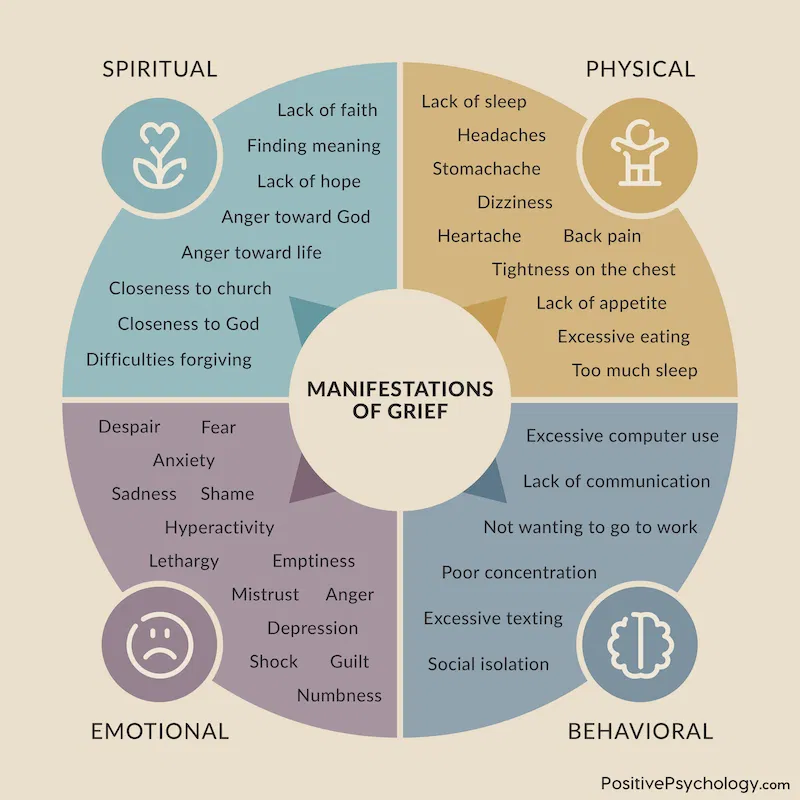
positivepsychology.com/grief-stages/
Your Only Requirements for Step 1
When you are in the crisis phase, standard self-help advice is useless. The bar has to be lowered all the way to the floor. Your goals right now are not about “fixing” your faith or finding joy; they are about raw, dependent survival on the Creator.
1. Acknowledge the floor and let God hold you: Survival Level Zero.
If you need to lower yourself down to the floor today, do not fight it. Let it hold you, and know that God is right there with you. You don’t have to stand up to impress Him or anyone else. If a silent friend, a family member, or a pet sits in that darkness with you, accept them as a gift of comfort from the Holy Spirit.
2. Drink water as an act of stewardship: Survival Level Zero.
If you cannot eat meals, or if you are forcing yourself to prepare food for others but cannot swallow a bite yourself, do not force it. But keep a bottle of water close by—at your bedside, at your desk at work, or on the kitchen counter. Take a drink from time to time. Ask God to use that water to sustain you while your mind is fighting to survive.
3. Drop the expectations and hand them to the Lord: Survival Level Zero.
If you have to work or care for family, do the absolute bare minimum, and surrender the rest to God. The house can be filthy. The laundry can pile up. The chores they used to do can sit completely untouched. Pray a one-sentence prayer: “Lord, I cannot handle this house today; I leave it in Your hands.” Forgiving yourself is the first step to letting God carry the burden.
Step 1 Survival Practice: The 3:00 PM Check-In
The mid-afternoon specifically around 3:00 PM is often when the initial adrenaline of the morning completely evaporates. If you are at work, it’s when the panic attacks hit hardest. If you are at home, it’s when the silence crashes down. Instead of fighting it, you are going to pause for a three part survival check-in, inviting God into the exact coordinates of your pain.
1. The Grounding (1 Minute)
Wherever you are, whether you are hiding in a bathroom stall at work, sitting in your car, or flat on the rug at home, pause. Consciously feel the surface beneath you. Feel the weight of your body pressing into the chair, the seat, or the floor. Say to yourself out loud or in your head: “I am right here. God has me. He is holding me.” Lean into the reality that you are fully supported.
2. The One-Sip Metric (Fierce Hydration)
Locate your water. Reach out, unscrew the cap, and take a slow, deep sip. But do not stop there. When you are in the deep shock of this season, you cannot let that water bottle just sit by your side as a prop. You need to keep drinking. Every time your mind starts to loop, every time the panic rises, and every time you look at the empty spaces in the room, take another drink. Finish the glass. Drain the bottle, and go get some more. As you swallow, remind yourself that you are actively protecting your body from the brutal strain of this shock. You are rehydrating life back into your body, forcing yourself to stay hydrated when your mind is fighting to survive the hour.
3. The Holy Immunity Declaration
Think about the mountain of demands pressing on you right now, whether it’s an email you haven’t answered, dinner you have to cook, or a chore they used to handle. Pick one specific thing that is causing you the most mental guilt right now. Name it, and say out loud to God: “Lord, I grant myself holy immunity from this right now. You are my provider, and I trust You to handle what I cannot touch today.” Let it drop, close your eyes for thirty seconds, and just breathe in His grace.
Step 1 Reflection: Survival Journaling
When your world has ended, trying to find words can feel impossible. God does not need a polished journal entry; He just wants your raw heart. Write the unfiltered truth of what your mind and soul are experiencing right now.
My soul is weary with sorrow; strengthen me according to your word. Psalm 119:28 NIV
1. Documenting the Panic and Waking Reality
Describe what it feels like to open your eyes each day, or what a panic attack feels like when reality sets in. Where is God in those terrifying moments?
- Think about: That fraction-of-a-second pause in the morning before the realization hits your chest, the anger at being back in a world where they are gone, or the sudden terror where you cannot breathe. Write down the truth of the mental battle, even if you need to tell God how angry or terrified you are.
2. Naming the Clash of Demands and Surrender
What are the specific tasks, chores, or responsibilities (work, meals, childcare, empty roles) that you mentally cannot face right now but feel forced to handle?
- Think about: The immense guilt of trying to perform life while your world is shattered. Write them down, look at them on the paper, and explicitly hand them over to God by writing: “Lord, I am surviving a catastrophe. I will do only what is required to get through this hour, and I trust You to cover the rest.”
3. Chronicling the Sanctuary of the Floor and His Witnesses
Describe the mental need to pull yourself down to the ground, and how God is providing comfort in that space.
- Think about: Why the floor is the only place that matches how shattered you feel inside. Describe what it means to be down there, and how it feels to have a companion, whether it is the silent presence of a dog, a friend who doesn’t make you talk, or just the heavy presence of the Holy Spirit. Acknowledge what keeps you tethered when you mentally want to crawl out of this reality.
So David and his men wept aloud until they had no strength left to weep. 1 Samuel 30:4 NIV
A Prayer for the Floor
God,
I am completely broken, and I cannot lift my head. My world has ended, and whether I am hiding in a bathroom stall at work, weeping at the stove, or curled up flat on the floor, the pain is so violent that I am furious I have to exist in this reality. Being awake is an intolerable torment.
I don’t have the strength for a standard prayer. I don’t have any elegant words, and I don’t have any faith to spare right now. All I have is the raw terror of this shock.
Please, meet me here in the wreckage. You promised You are close to the brokenhearted, so bind Yourself to whatever space I am collapsed in right now. Protect my physical heart from failing under the weight of this “Widow’s heart” shock. When I turn to medicine, sleep, or anything else just to numb the agony of being awake, look at me with mercy and grace, not judgment. You know my frame; You know I am but dust.
I hand over the expectations, the bills I can’t process, the chores they used to do, and the house that is falling apart. I mentally cannot carry them, Lord. Carry them for me. Grant me the holy immunity to let things slide so I can use my microscopic amount of energy just to breathe. Comfort the family members around me that I love but cannot care for right now. Thank You for the silent witnesses, the pets who lay across my chest, the friends who sit on the rug without demanding words, the people who share this heavy silence. Let them be Your hands and feet.
I cannot look at next week or next year. I can barely see the next ten minutes. If the only thing I can do today is breathe and survive until the sun goes down, let that be enough. Hold me together, Lord, and let the floor hold the rest.
Amen.
Conclusion: Living Minute by Minute
There is absolutely no timeline for this phase. Do not let anyone tell you that because a few weeks have passed, your faith should have pulled you through by now. When you are in the wreckage of a shattered life, looking down the road at the future is terrifying and impossible. You do not have to figure out how to live the rest of your life without them today. You only have to survive the next ten minutes.
If the darkness feels total right now, let it be dark. Do not fight the panic, do not apologize for the tears, and do not feel guilty for the ways you are trying to numb the pain just to get through the day. Your soul has been deeply wounded.
If all you did today was open your eyes, face the agonizing reality that they are gone, and somehow breathe until the sun went down, you have fought a monumental battle. You are still here, and God is still holding you. Even if you are flat on your back, you are surviving by His grace. Be as gentle with your broken soul as your body is weary. Close your eyes, reach out for the silent comfort of the ones He sent to love you without words, and let tomorrow take care of itself.
Leave a Reply